Hi & thanks for dropping by.
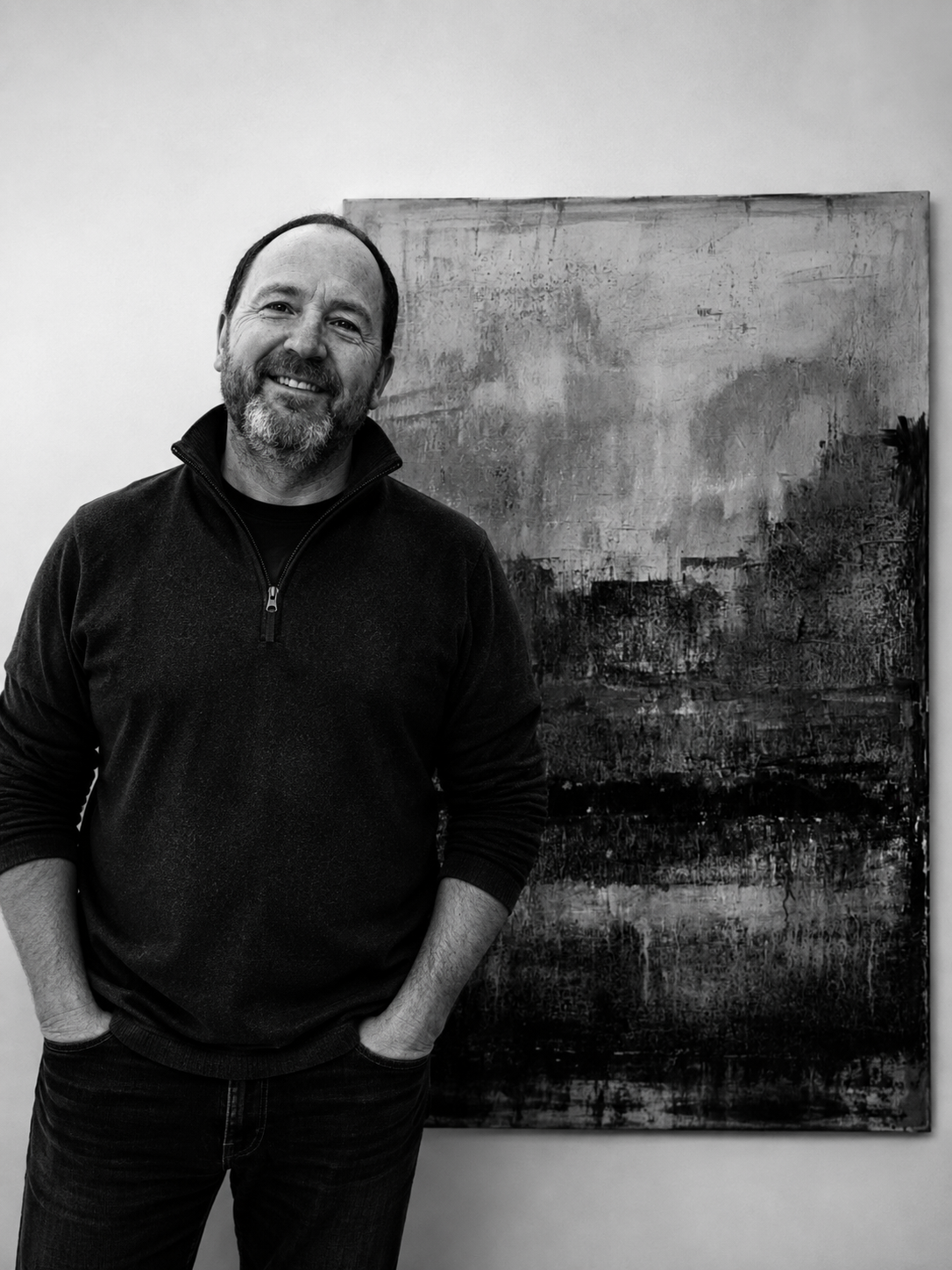
My name is James Livingstone and I’m a contemporary British artist & sculptor. My original architectural and structural assemblages exploring industry and decline became a major part of my past work but now I am focusing on developing a new body of work of abstract paintings & contemporary wall sculptures.
Some of my work is represented by Nikitin Gallery (New York) and showcases on premium global platforms including Artsy and Saatchi.Art and my work was recently featured in the May 2026 edition of the Contemporary Art Magazine NikitinMag.
Artistic Influences
My artistic influences can be traced back to my childhood, growing up in rural surroundings and spending my early years closely connected to the countryside and the natural world.
Being immersed in nature through the changing seasons left a lasting impression. The subtle changes in colour, light, weather, vegetation and landscape, together with the smells and textures of the countryside, created an awareness of nature that I feel is deeply rooted within. Perhaps when you grow up surrounded by these changes, you develop an emotional connection to them without necessarily realising it at the time.
I believe that connection remains subconsciously and finds its way into my artwork. The seasons, and the continual cycles of growth, change, decay and renewal, can influence not only the subject of my work but also its colour, texture, lightness and atmosphere.
Spring and summer can bring a sense of freshness, light and energy. I am drawn to lighter, brighter colours during these periods — soft blues, yellows and fresh, vibrant tones — attempting to capture the clarity and optimism of a spring or summer landscape. A crisp winter's day can create an entirely different feeling, with its particular light, stillness and atmosphere.
Autumn, by contrast, can bring a greater sense of weight and transformation. The deeper earth tones, changing colours and feeling of things moving towards winter can naturally lead my work towards richer, heavier and more atmospheric surfaces. These seasonal changes provide an emotional vocabulary through which colour and texture can express different states of nature.
This connection is particularly evident in my post-industrial work, where abandoned factories and remnants of human industry become part of a changing landscape. I am interested in the point where industry begins to disappear and nature gradually reclaims its space — trees growing through forgotten structures, vegetation surrounding remnants of buildings, and water and landscape returning to places once dominated by industry.
For me, this creates a relationship between the human-made and the natural world: construction and decay, permanence and impermanence, loss and regeneration. The seasons themselves embody these same cycles. Nothing remains static; landscapes change, disappear and return in different forms.
In some ways, I feel these ideas may be an extension of the relationship with nature that began during my childhood — a connection that has remained beneath the surface and continues to influence the way I see and make art today.
STUDIO46